Kyle Lead Paint Removal offers lead paint removal in Lockhart, TX, with lead paint testing and inspection, interior and exterior abatement, lead-safe renovation and encapsulation for pre-1978 houses. We first sort out whether a project is testing, abatement under DSHS rules or renovation under the EPA rule, then plan the work around the house and any historic approval it needs.
Lockhart has the largest share of older housing among the three cities on this site. Named Caldwell County seat in 1848, it became a cotton shipping town after the railroad arrived in 1887 and has grown slowly since, from 6,489 people in 1970 to 14,379 in 2020. The 2020-2024 American Community Survey dates 39.4% of its 5,865 homes before 1980 and 29.4% before 1970.
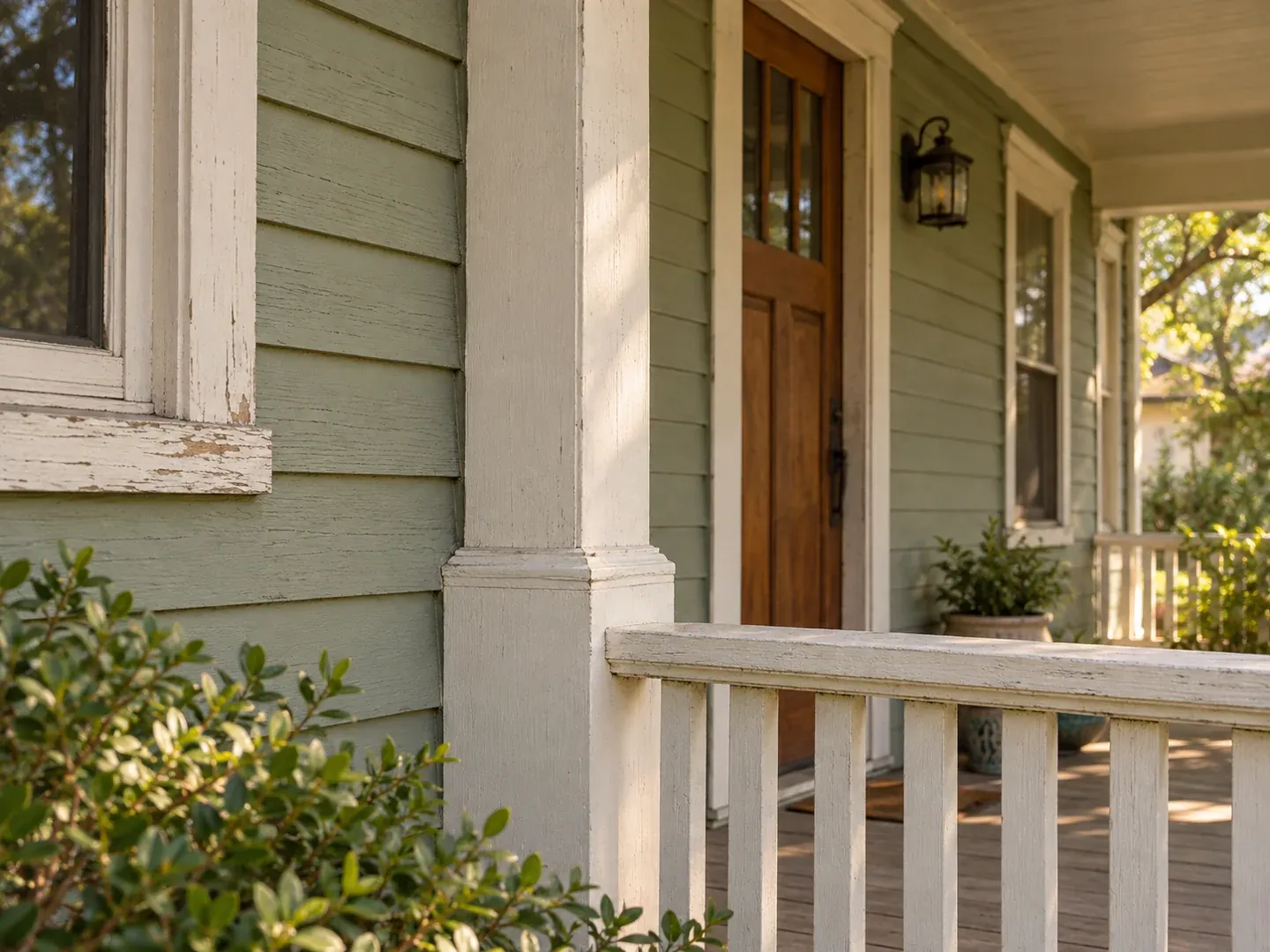
The oldest Lockhart houses, those built before 1940, can carry the details that slow lead work down: turned porch posts, brackets, spindles, beadboard ceilings, tall wood windows and layered trim, each possibly under several layers of paint. Stripping detail by hand is slow, so removal, replacement in kind and encapsulation are weighed surface by surface. Our lead paint removal for older homes page sets out each scope.
Landmark and historic-district exteriors
Most exterior work in the Courthouse Historic District or on a designated landmark needs a certificate for alteration, according to the city. Certain signs, windows, doors and exterior fire-safety stairs may get administrative approval instead. For the choice between replacing and restoring old sashes and doors, see lead-painted windows and doors.
Testing and inspection
With about 1,725 Lockhart homes built before 1970, testing before paint is disturbed is a reasonable default for an older house. A DSHS-certified inspector identifies lead-based paint throughout the home; a certified risk assessor focuses on present hazards such as deteriorating paint and lead in dust and soil. Our lead paint testing and inspection page compares the two.
Interior abatement
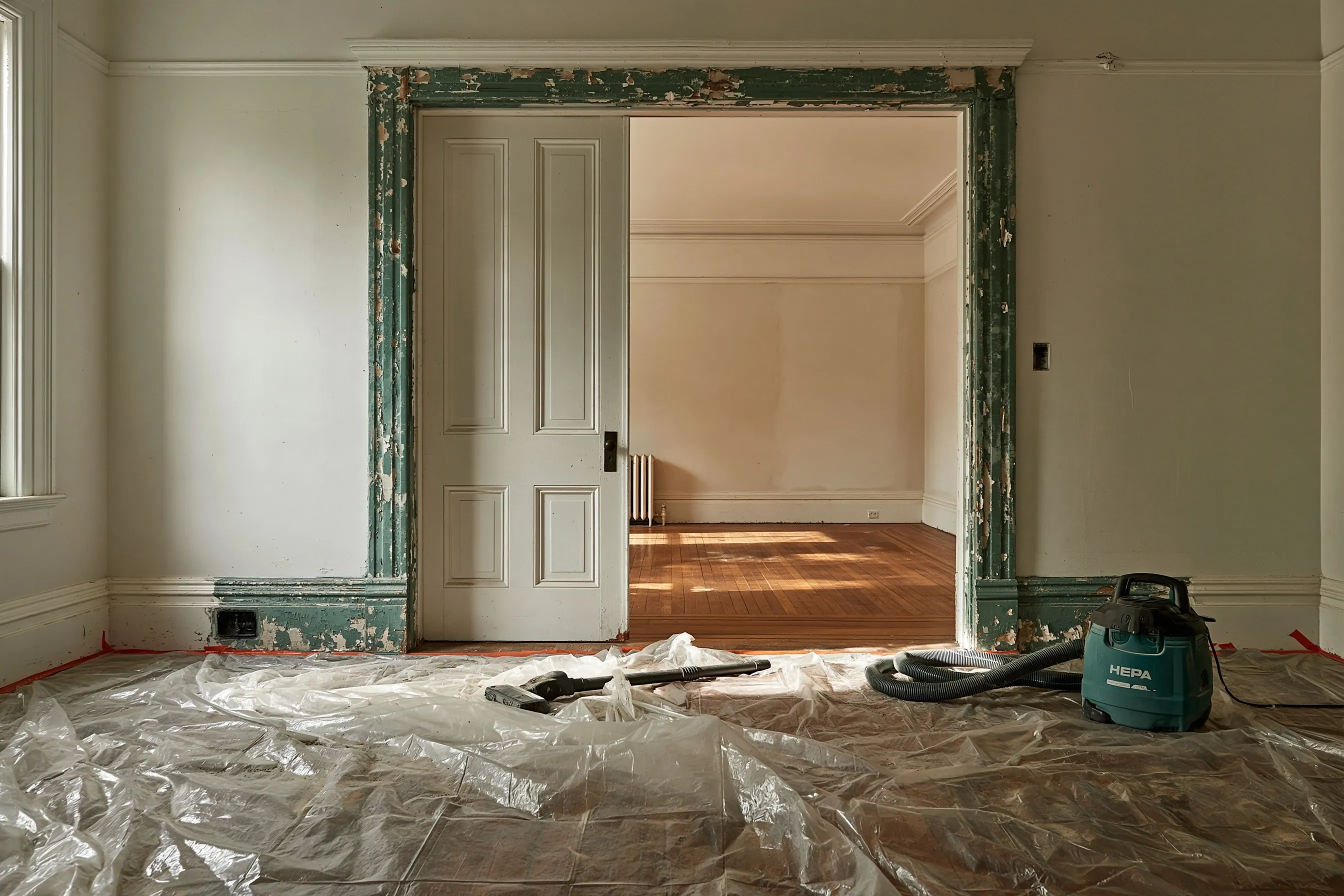
Interior abatement covers woodwork, walls, stairs and floors with confirmed lead paint. Families should plan where they will stay, because abatement firms must ensure occupants are out of the home during the work, and the state needs advance notice from the firm before it starts. When the project is a remodel rather than removal, lead-safe renovation is the separate path.
Encapsulation and enclosure
On sound interior walls and trim, an encapsulant coating or an enclosure such as new drywall can seal lead paint without stripping it, which may help keep original surfaces. Because the paint remains, it needs periodic checks and records to pass on to future buyers or tenants. More on lead paint encapsulation and enclosure.
Housing age in Lockhart
Lockhart’s older homes are spread across every decade before 1980. The ACS counts 569 homes from 1939 or earlier, 410 from the 1940s, 366 from the 1950s, 380 from the 1960s and 585 from the 1970s, together 2,310 of the city’s 5,865. EPA material notes that 87% of homes built before 1940 are likely to have lead-based paint, so the oldest group, almost one Lockhart home in ten, is the clearest case for testing before any work.
At the other end, the 1970s count includes houses finished in 1978 and 1979, which are outside the federal rules, so confirm the actual year from the county appraisal district record or the original permit. About a third of Lockhart homes are rented, so landlords need these answers as much as owner-occupants do.
The 1893-94 Caldwell County Courthouse anchors the Courthouse Square Historic District, listed on the National Register on January 3, 1978. The city recognizes the district and numerous landmark buildings outside it, and its Historic Districts and Landmarks ordinance aims to keep the exterior appearance of regulated construction or alteration in character. The city’s downloads include a Certificate for Alteration application, a historic preservation tax abatement application and a Historic Landmarks Zoning Map for checking whether a house is designated.
For lead work the useful line is between maintenance and alteration. The city exempts repainting a building in the same color and routine maintenance, except painting previously unpainted masonry or altering a faded historic painted sign. Changes that alter appearance, such as replacing windows, doors, siding or porch parts with something different, go through a certificate for alteration, with applications handled by the Historical Preservation Commission.
A workable order for a pre-1978 Lockhart house: confirm the construction date and whether the property is a landmark or in the Courthouse Square district; test the surfaces the project will touch; choose between removal, encapsulation and lead-safe renovation; obtain any certificate for alteration; then schedule. Exterior work goes easier outside the long Central Texas summer, when normal highs in the National Weather Service’s regional Austin summary stay at 90°F or above from late May to late September.
Lockhart sits in Caldwell County rather than Hays, but the lead rules do not change at the county line: DSHS certification and notification for abatement, EPA certification for renovation, and the federal disclosure rule for sales and leases of pre-1978 homes. Keep every report from the project, since sellers and landlords must pass along known lead records.
Does Lockhart require approval for exterior work on a historic home?
If the home is a designated landmark or inside the Courthouse Square Historic District, a certificate for alteration is required for construction or alteration that affects its appearance, with applications going to the Historical Preservation Commission. Repainting in the same color and routine maintenance are exempt, and some window and door changes can be approved administratively.
Is lead paint likely in older Lockhart homes?
It is possible in any home built before 1978, and Lockhart has about 2,310 homes from before 1980, according to the ACS. The EPA estimates that roughly three-quarters of U.S. homes built before 1978 still contain some lead-based paint. Age only raises the odds; a DSHS-certified inspection shows which surfaces contain it.
Should I test before buying an older Lockhart home?
For a pre-1978 house it is worth doing. Federal disclosure rules let a buyer take 10 days to have the house inspected or risk-assessed for lead, a period the parties may change or waive in writing, and the seller has to share any lead records on hand. An inspection shows where lead-based paint is; a risk assessment shows what needs attention now.
Who handles lead abatement notifications in Texas?
The certified abatement firm, not the homeowner. Under 25 TAC 295.214 the firm notifies DSHS, through its notification system and the regional office, at least seven working days before abatement begins in pre-1978 housing or a child-occupied facility, with one notification per separate building.
Send the Lockhart address, the construction year if known, whether the house is a landmark or in the courthouse district, and what you want done. We'll get back to you soon with an estimate or any questions we have. Estimates are free and there's no obligation.